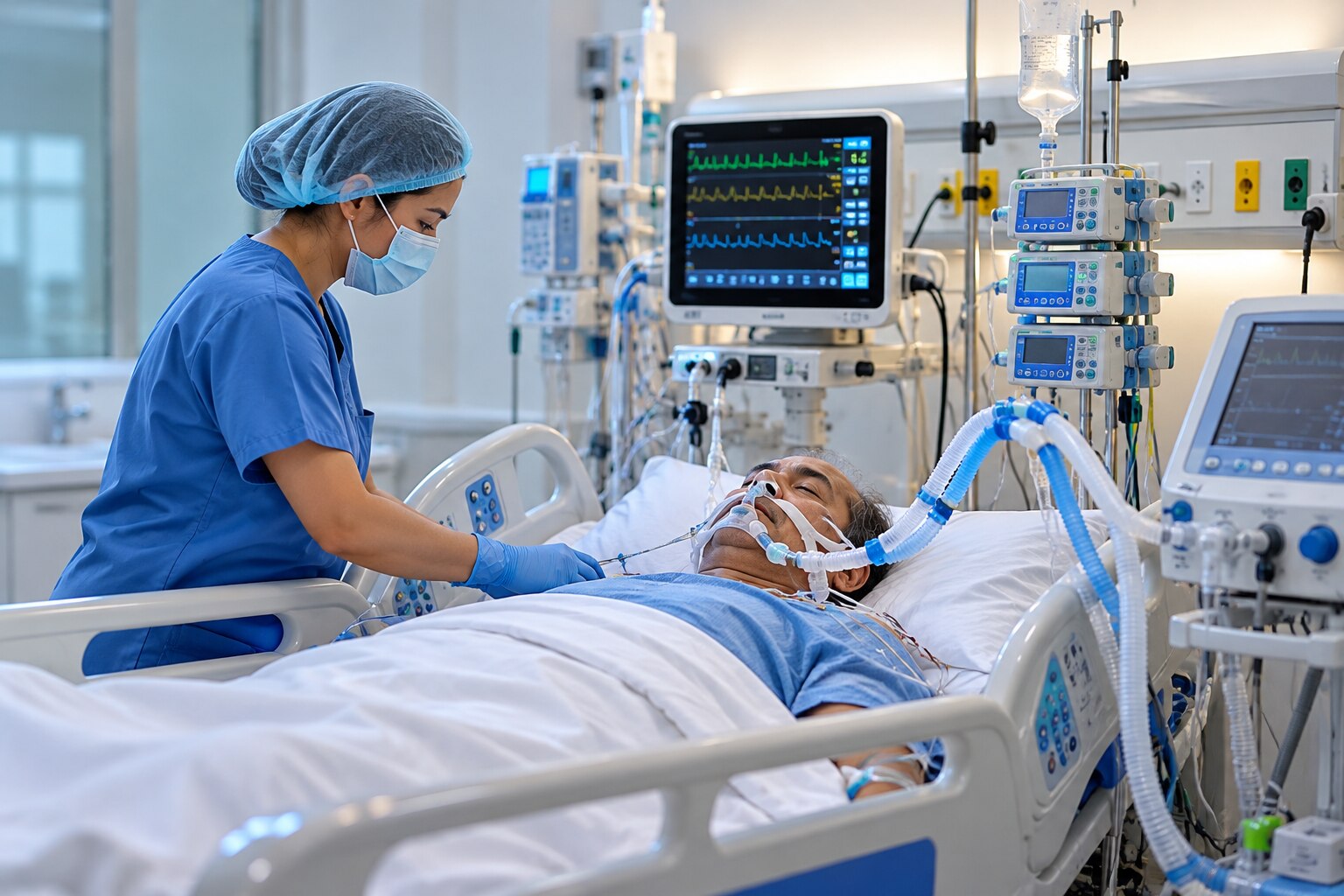
A general ward cannot provide the same continuous observation, organ support and response speed as an intensive care unit. By understanding which warning signs justify ICU assessment, what treatment the unit can deliver, and which questions to ask before choosing a facility, you can make a more informed decision during a rapidly changing illness.
Key takeaways
- Ask whether the ICU provides continuous oxygen, heart rhythm and blood-pressure monitoring.
- Seek urgent ICU assessment for worsening breathing, shock, confusion or dangerously low urine output.
- Check for ventilators, dialysis, emergency imaging, laboratory testing and round-the-clock critical-care staff.
- Discuss infection control, visiting rules, treatment goals and likely recovery needs before admission.
What an ICU provides beyond ordinary ward care
An ICU helps by detecting deterioration minute by minute and treating it before breathing, circulation or consciousness fails completely. Continuous monitors track oxygen level, heart rhythm, blood pressure and urine output, while critical-care nurses and doctors can respond immediately. An ordinary ward relies on scheduled observations and cannot provide the same speed or organ support.
For someone comparing icu care benefits in fursungi, check whether the unit provides:
- One-to-one or closely supervised nursing for unstable patients
- Non-invasive respiratory support and ventilators when oxygen alone is insufficient
- Infusion pumps for medicines such as vasopressors that raise dangerously low blood pressure
- Invasive blood-pressure monitoring when cuff readings are not enough
- Blood-gas testing to measure oxygen, carbon dioxide and acidity quickly
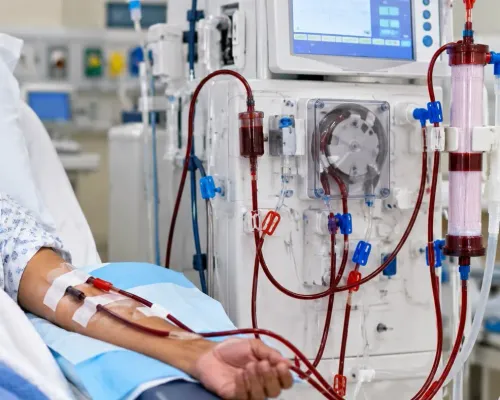
- Dialysis or continuous renal replacement therapy when the kidneys stop clearing waste
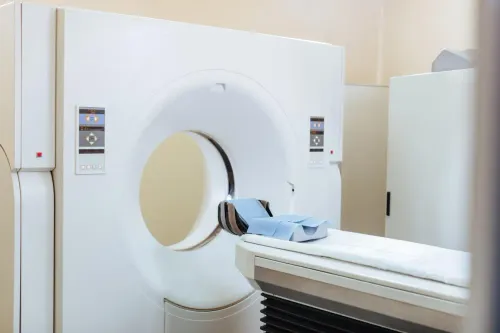
- Rapid access to imaging, laboratory testing, emergency surgery and blood transfusion
ICU care also creates a controlled setting for repeated reassessment. A patient can move from emergency observation to intensive care when oxygen needs rise, blood pressure remains low, consciousness changes or a dangerous heart rhythm appears; improvement can allow transfer to high-dependency or ward care.
This surveillance does not guarantee recovery, but it reduces the delay between a warning sign and treatment.
Which illnesses and warning signs justify ICU assessment?
A patient needs ICU assessment when breathing, circulation, consciousness or kidney function is failing or could deteriorate within hours. Do not wait for collapse; ask the treating clinician to reassess the care level when any of these signs appears:
- Oxygen levels remain low despite increasing oxygen, breathing becomes exhausting, or blood-gas results show rising carbon dioxide or severe acidosis.
- Blood pressure stays low after fluids, urine output falls sharply, skin becomes cold and mottled, or a vasopressor infusion is being considered.
- Sepsis causes confusion, rapid breathing, weak pulses or organ dysfunction; septic shock requires urgent antimicrobials and circulation support.
- A patient becomes difficult to wake, has repeated seizures, a dangerous heart rhythm or a new neurological deficit.
- Major trauma, extensive burns, severe poisoning or complications after high-risk surgery threaten more than one organ.
| Setting | Monitoring and support | When it applies |
|---|---|---|
| Emergency observation | Frequent checks and short-term treatment | Diagnosis is still developing and vital signs remain stable |
| General ward | Scheduled observations and standard oxygen or medicines | The illness is serious but not rapidly worsening |
| High-dependency care | Closer observation and selected organ support | One organ needs escalation without full ICU support |
| ICU | Continuous monitoring, ventilators, vasopressors and dialysis access | Organ failure, shock or rapid deterioration is present |
The phrase intensive care benefits pune does not guarantee equal capability between hospitals. Ask about round-the-clock critical-care staff, blood-gas testing, imaging, dialysis and a defined transfer pathway.
How intensive care supports failing organs
Breathing failure can worsen within minutes, so ICU staff can increase support step by step: oxygen by mask, high-flow nasal oxygen, non-invasive ventilation, or a breathing tube connected to a ventilator. They also treat the cause, such as pneumonia, asthma, sepsis or fluid in the lungs, while checking blood gases and oxygen levels repeatedly.
| Organ failure | ICU treatment | What it prevents or addresses |
|---|---|---|
| Breathing | High-flow oxygen, non-invasive ventilation, intubation and mechanical ventilation | Low oxygen, rising carbon dioxide and exhaustion |
| Circulation | Intravenous fluids, blood transfusion, vasopressor infusion and invasive blood-pressure monitoring | Shock, dangerously low pressure and poor organ blood flow |
| Kidneys | Fluid and electrolyte correction, intermittent haemodialysis or continuous renal replacement therapy | High potassium, severe acidosis, pulmonary oedema or uraemic complications |
Circulatory collapse may require rapid fluids, packed red-cell transfusion, a central venous line and vasopressors such as norepinephrine through a controlled infusion. Urgent imaging, antibiotics, drainage or surgery can address the trigger; a local ICU must have a defined transfer route for cardiac, neurological, surgical or extracorporeal services it cannot provide.
Dialysis is not automatic after every creatinine rise. The decision depends on urine output, potassium, acid levels, fluid overload and response to treatment. Choosing a critical care hospital near Fursungi means checking for round-the-clock intensivists, trained nurses, ventilators, blood-gas testing, imaging, laboratory support and dialysis access.
The benefits, risks and recovery burden of ICU treatment
ICU admission can preserve life when a serious illness is reversible, but it is not a guarantee of recovery. Ask the treating clinician what improvement is realistically expected, how quickly it could occur, and what alternatives exist.
1. Weigh the likely benefit. Continuous observation, ventilator support, blood-pressure medicines, dialysis and urgent procedures can restore breathing, circulation or kidney function. The benefit is greater when the underlying problem is treatable and the patient’s baseline health supports recovery.
2. Ask about treatment burdens. A ventilator can require sedation and may cause throat injury or make weaning difficult. Central lines, urinary catheters and invasive monitors can introduce infection; immobility causes muscle loss, clots and pressure injuries. Confusion and agitation are also common during critical illness.
3. Discuss the recovery burden before admission. Survivors can leave the ICU weak, unable to walk independently, or troubled by memory problems, anxiety, depression or post-traumatic stress symptoms. Rehabilitation, nutrition, follow-up appointments and family caregiving may continue for weeks or months.
4. State the patient’s priorities. Ask whether the goal is survival at any cost, a trial of intensive treatment with reassessment, or comfort without invasive procedures. Record preferences about CPR, ventilation, dialysis and transfer while the patient can participate.
A clear plan should name the treatment’s intended endpoint and the signs that it is failing. Families deserve time to ask questions, but urgent deterioration may require immediate consent decisions.
How to assess an ICU hospital in Fursungi
Before choosing an ICU hospital in Fursungi, ask who is physically available at 2 a.m., not merely listed on the website. Confirm a round-the-clock critical-care physician, trained ICU nurses, respiratory support staff, infection-control procedures and a documented escalation chain. Ask how quickly blood-gas results, laboratory tests and imaging return.
| Capability | Verify directly | Why it matters |
|---|---|---|
| Monitoring and equipment | Ventilators, non-invasive respiratory support, infusion pumps, invasive blood-pressure monitoring and blood-gas testing | Deterioration requires treatment before routine ward review |
| Organ support | Vasopressor infusions, dialysis or renal-replacement therapy, blood transfusion and emergency surgery access | A unit without these services may need urgent transfer |
| Transfer plan | Named receiving hospitals, ambulance arrangements, accepting specialist and transfer triggers | Delays worsen stroke, shock, respiratory failure and major trauma |
| Recovery planning | Physiotherapy, nutrition review, medication reconciliation and post-ICU follow-up | Weakness, memory problems, anxiety and depression can persist |
Ask whether imaging, laboratory staff and blood products remain available overnight and on public holidays. For suspected heart attack, stroke or severe breathing difficulty, a nearby capable unit can beat a distant hospital; proximity is not enough if advanced cardiac, neurological, surgical or extracorporeal care requires transfer.
When assessing Shivam Hospital M-08042754125, ask these questions directly and request the transfer and follow-up process in writing. Also ask how families receive updates and who explains treatment goals, likely burdens and alternatives.
Related product
 | ICU Services - The Intensive Care Unit (ICU), is a very challenging environment. View product → |
Frequently asked questions
What does an ICU provide beyond ordinary ward care?
An ICU provides continuous monitoring, rapid clinical response, one-to-one or close nursing observation and organ support unavailable in a standard ward.
Which illnesses and warning signs justify ICU assessment?
Severe pneumonia, sepsis, heart failure, stroke, major trauma, postoperative complications and worsening breathing, blood pressure, consciousness or urine output require urgent assessment.
How does intensive care support failing organs?
Ventilators support breathing, medicines and fluids support circulation, dialysis replaces kidney function, and monitoring guides treatment as organ function changes.
What should you check when assessing an ICU hospital in Fursungi?
Check 24-hour critical-care staffing, ventilators, dialysis access, emergency services, laboratory and imaging support, infection-control procedures and a clear family communication process.
Keywords